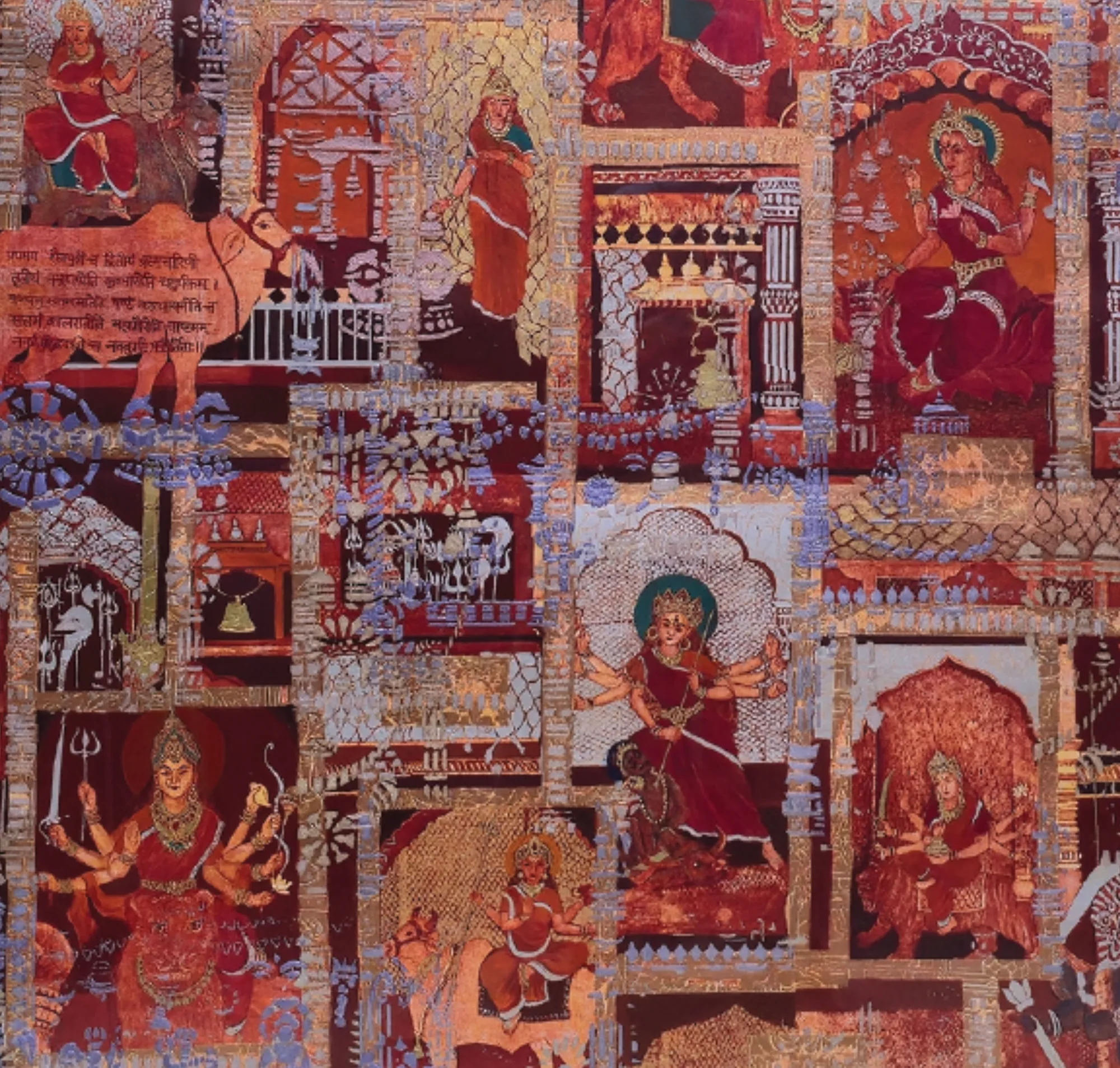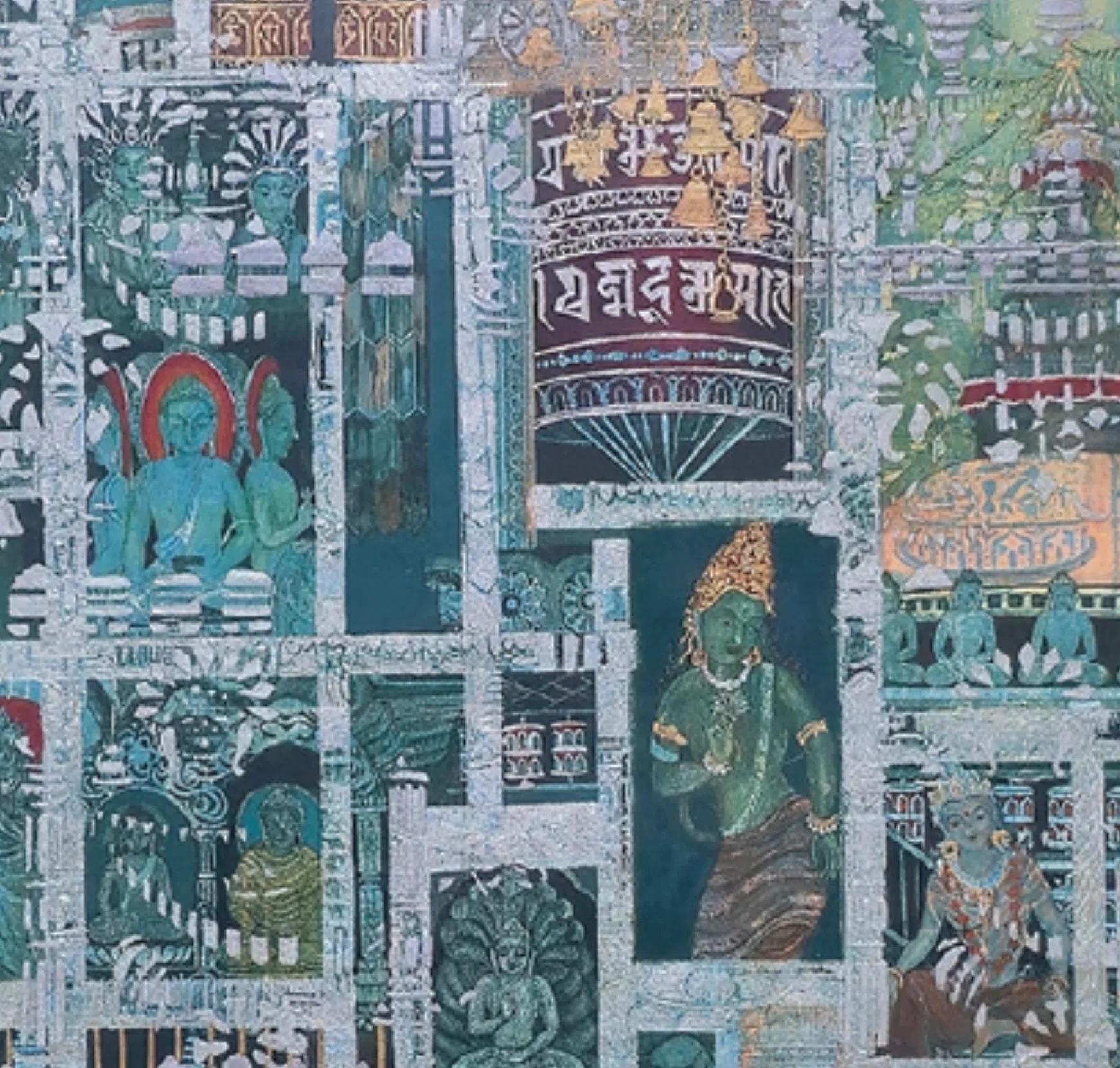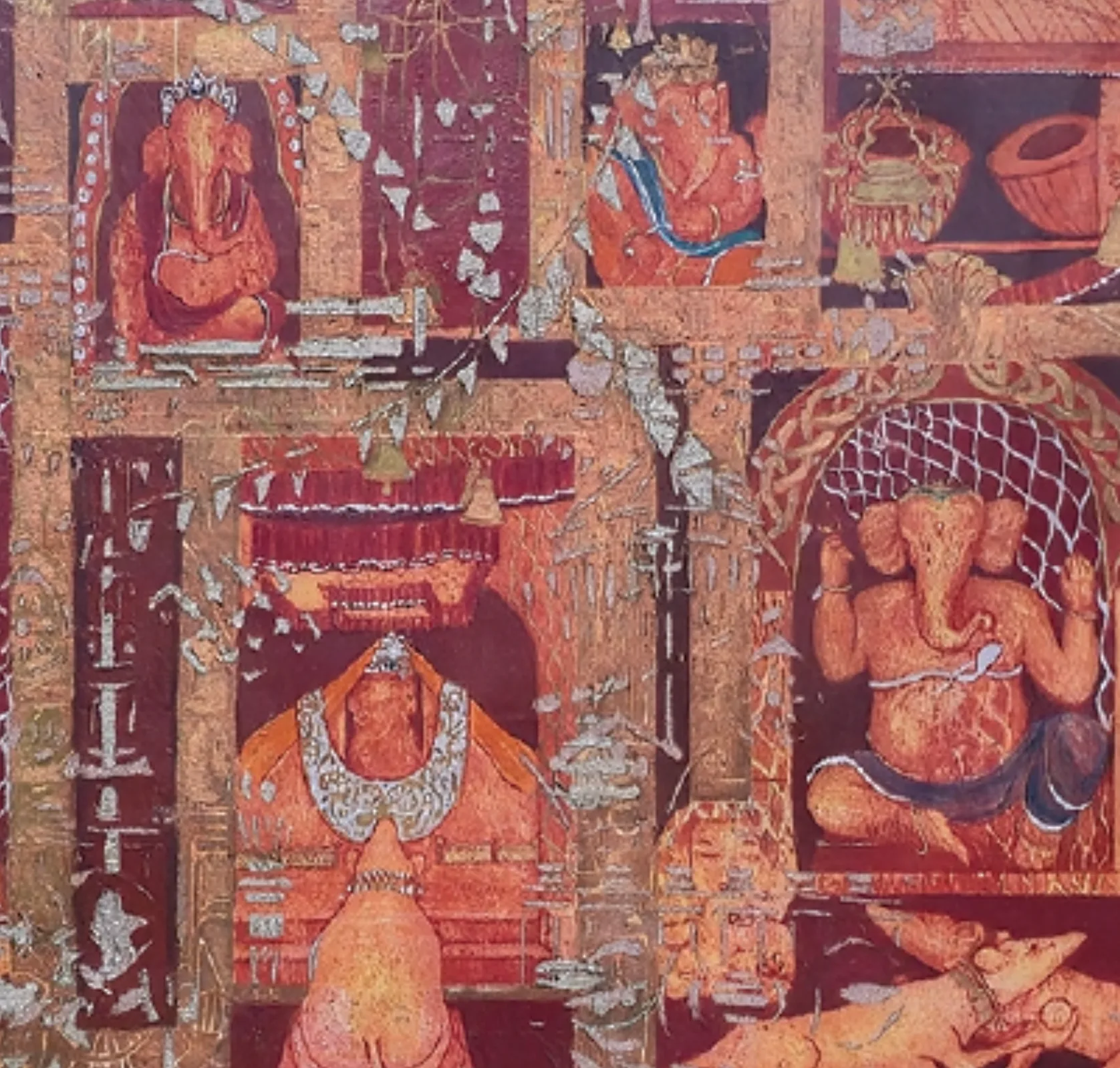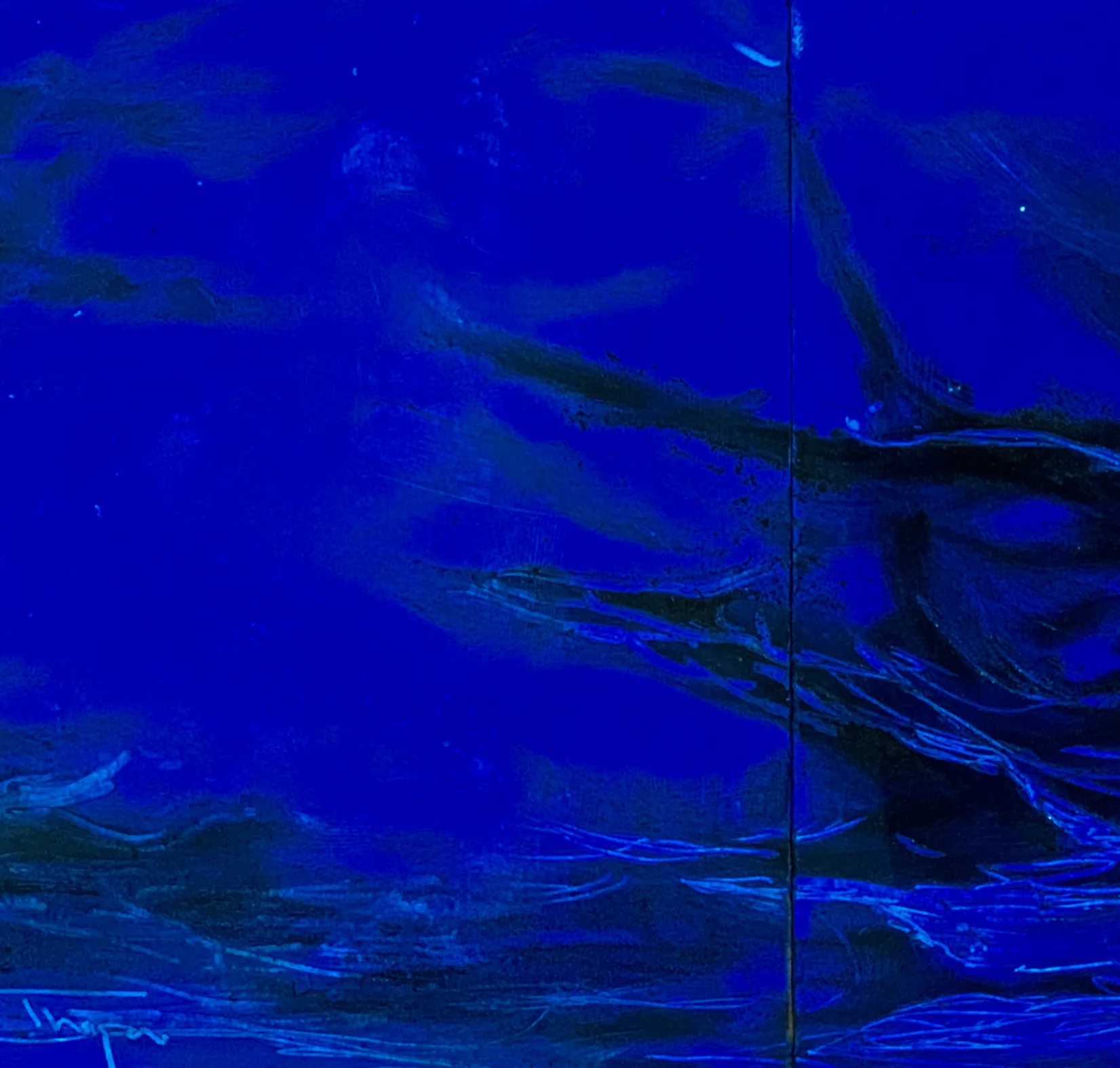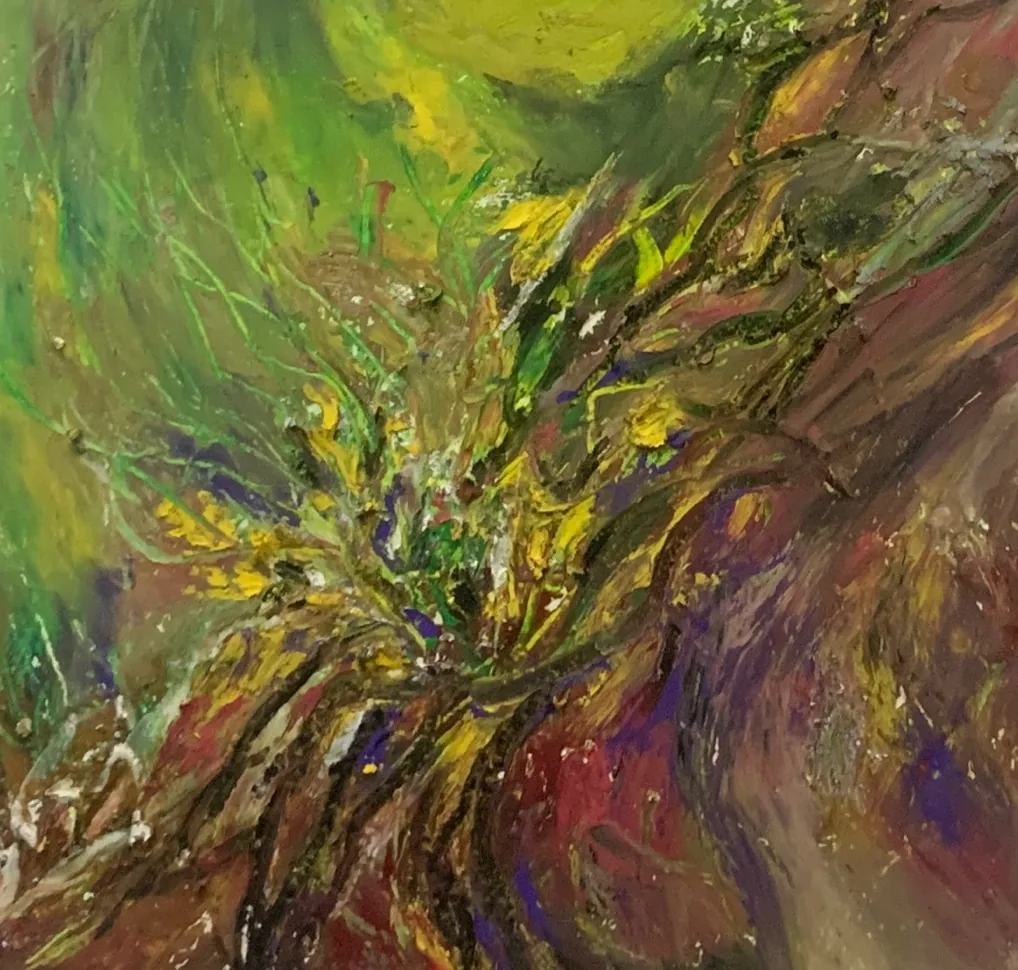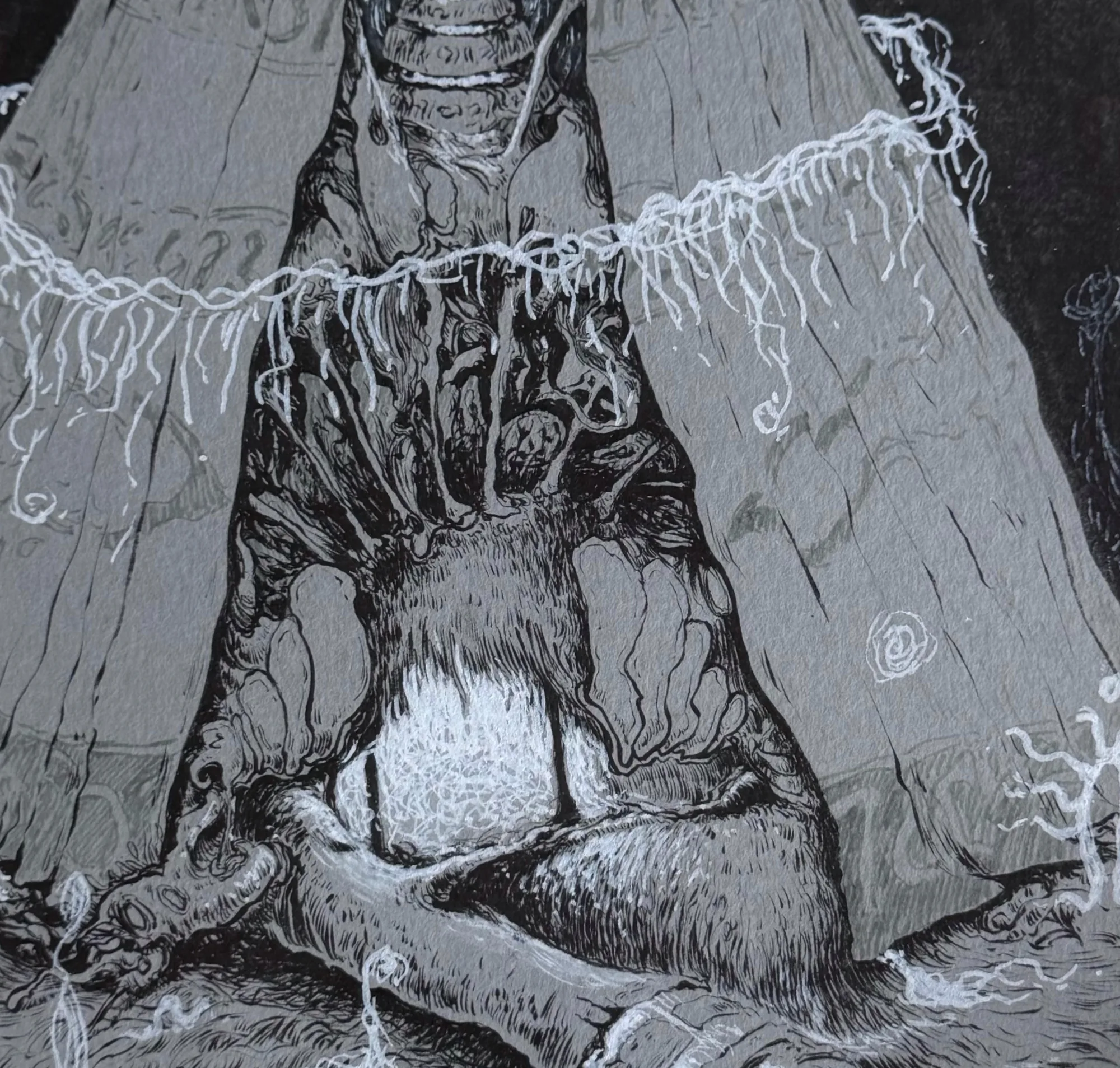
“My artistic practice explores the intersections of spirituality, mythology, memory, and cultural heritage through the medium of printmaking. Drawing inspiration from Hindu and Buddhist traditions, I create layered visual narratives that reimagine sacred architecture, deities, rituals, and festivals as spaces of contemplation and transformation. Having lived between Varanasi and Kathmandu, I am deeply influenced by the spiritual landscapes of both cities. The ghats of the Ganga, the temples of Kathmandu Valley, and the vibrant ritual life that surrounds them have become enduring sources of inspiration. Rather than depicting these subjects literally, I combine fragments of images, symbols, and memories through free association, creating compositions that move between reality, imagination, and the sacred. My works often bring together multiple deities, architectural forms, and ceremonial motifs within a single visual field, reflecting the interconnected nature of spiritual experience. Through etching, viscosity printmaking, embossing, and mixed-media interventions, I build richly layered surfaces that evoke the passage of time and the accumulation of cultural memory. Ultimately, my work seeks to reveal the enduring presence of the sacred in everyday life while inviting viewers to reflect on the relationship between tradition, place, and inner consciousness.”
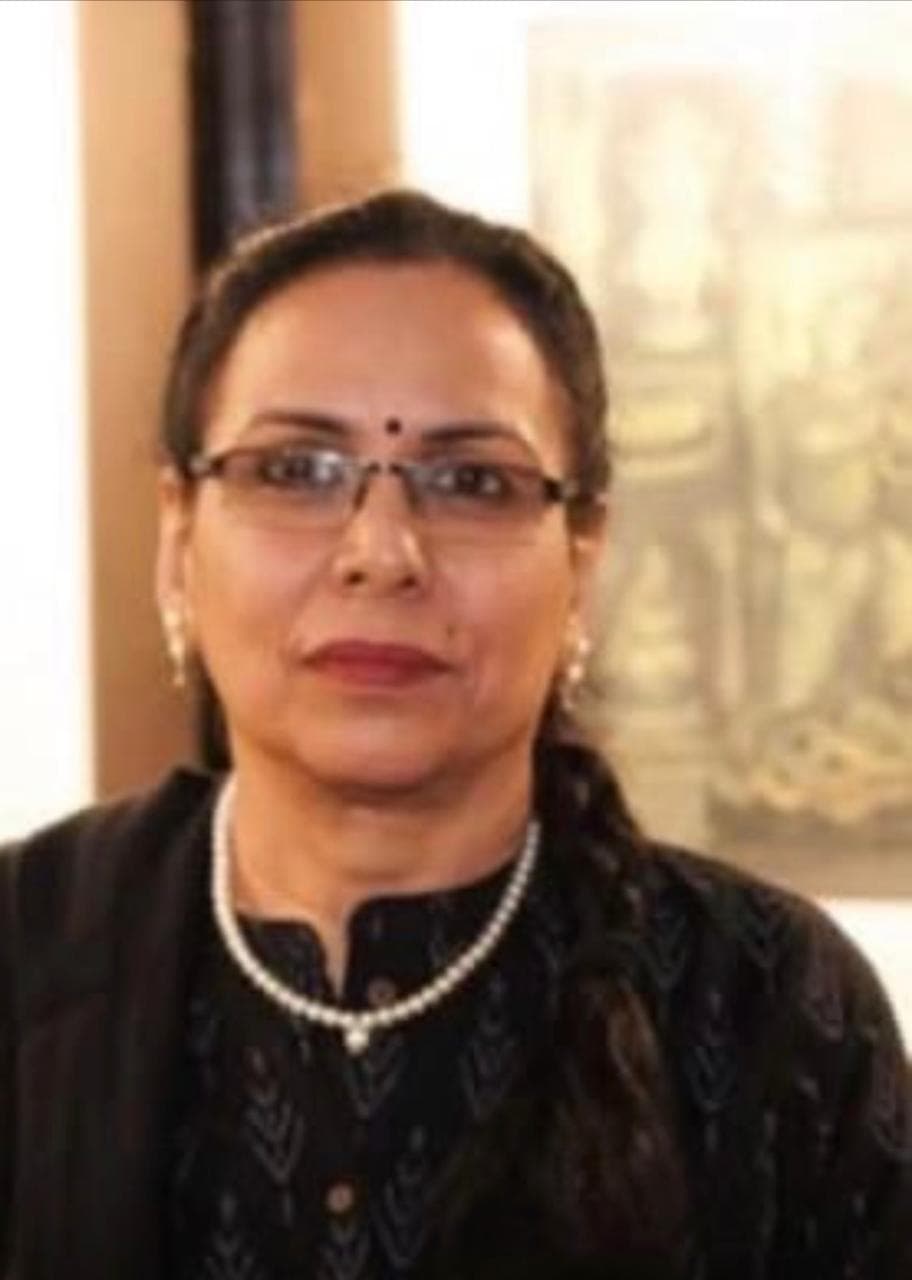
Dr. Seema Sharma Shah (b. 1966, Varanasi, India; Nepali citizen) is a distinguished Nepali contemporary artist, printmaker, educator, and art historian. She earned her Bachelor of Fine Arts in Painting (1988) and Master of Fine Arts in Printmaking (1990) from Banaras Hindu University, India, and later completed a Ph.D. in History of Art from the same institution in 1998. Widely recognized as one of Nepal's leading printmakers, Dr. Shah has exhibited extensively in Nepal and abroad, participating in more than 70 national and international exhibitions across Japan, South Korea, China, Thailand, Indonesia, Bangladesh, the United Kingdom, the Netherlands, France, Austria, the United States, and India. Her solo exhibitions have been presented at prominent venues including Siddhartha Art Gallery, Kathmandu; Gallery Ganesha and Jahangir Art Gallery, India; Open Eye Gallery, Scotland; Juno Art Gallery, South Korea; and Kyungin Art Gallery, South Korea. Dr. Shah's artistic practice draws inspiration from Hindu and Buddhist mythology, sacred architecture, ritual traditions, and the cultural landscapes of Kathmandu and Varanasi. Working primarily in etching and viscosity printmaking, she is known for creating richly layered compositions that combine deities, architectural motifs, festivals, and spiritual symbolism through innovative printmaking techniques. Her work has evolved from explorations of nature and the human condition to profound investigations of spirituality, cultural memory, and the feminine experience. Throughout her career, she has received several prestigious honors, including the Best Etching Award at Art Fest Doral, Miami, in 2013 and 2014, and an Honorable Mention at the First Printmaking Biennial, India, in 2018. An influential educator and mentor, Dr. Shah served as Associate Professor and Head of the Central Department of Fine Arts at Tribhuvan University, Kathmandu. Through her teaching, research, and artistic practice, she has played a significant role in shaping contemporary art and printmaking education in Nepal while inspiring generations of emerging artists. Read more